Awarded annually by Kent State University Press, the John T. Hubbell Prize recognizes the extraordinary contribution to the field of its namesake, who served as editor of Civil War History for thirty-five years. The winning article is selected from among the previous year’s Civil War History articles and is determined by the journal’s prize selection committee. The prize earns the recipient a $1,000 award from Kent State University Press.
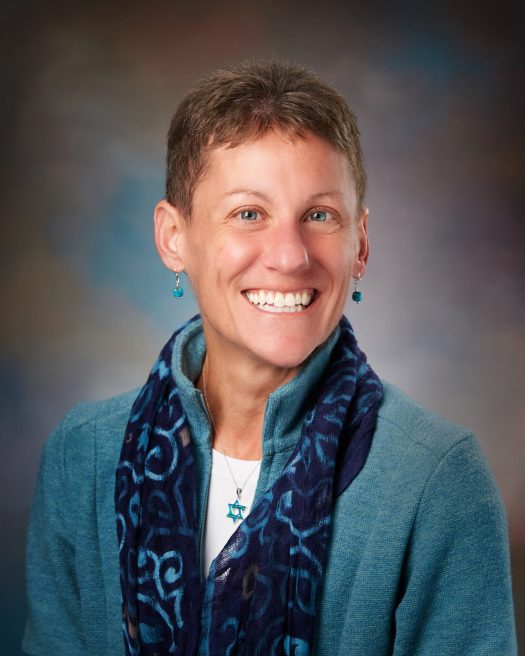
The Civil War History Prize Selection Committee and Kent State University Press are thrilled to announce that Marcy S. Sacks is the winner of the 2025 John T. Hubbell Prize for the best article published in Civil War History in the past year. The article, “‘I Shall Forward to You My Contraband’: Tracing Coerced Wartime Black Movement North through an Incomplete Archive,” appeared in the December 2024 issue.
Learn more about Dr. Sacks’ article or find it on Project MUSE.
Previous Winners
2024 – Timothy S. Huebner
Timothy S. Huebner is the winner of the 2024 John T. Hubbell Prize for the best article published in Civil War History in the past year. Huebner’s “Taking Profits, Making Myths: The Slave Trading Career of Nathan Bedford Forrest” is a masterpiece of scholarship that provides a definitive account of Nathan Bedford Forrest’s slave trading business before the Civil War and how and why he and his apologists tried so hard to downplay it for decades after. Huebner’s exhaustively researched and richly textured account reveals Forrest to have been an aggressive, large-scale trafficker in human beings whose Memphis operations in the 1850s expanded to among the largest and most lucrative in the South. Piecing together fragments of evidence about Forrest’s slave dealing, including from descendants of those he trafficked, Huebner’s research located the sites of Forrest’s operations in Memphis and led to a wider reckoning with this history in the city.
Timothy S. Huebner is provost and vice president for Academic Affairs and professor of history at Rhodes College. He is the author or editor of four books, including Liberty and Union: The Civil War Era and American Constitutionalism (2016). He has delivered invited lectures at the US Supreme Court, the National Constitutional Center, and the American Civil War Museum. His essays, reviews, and op-ed pieces have appeared in the Memphis Commercial Appeal, SCOTUSblog, the Washington Post, and the New York Times. He served as chair of the board of editors of the Journal of Supreme Court History.
2022 – Edward Valentin Jr.
Edward Valentin Jr. has won the John T. Hubbell Prize for the best article published in Civil War History during 2021 for his March 2021 article, “Local Knowledge: Black Texans, the Freedmen’s Bureau, and Military Occupation in Reconstruction Texas.”
The prize selection committee, comprised of a subgroup of members of the journal’s editorial advisory board, praised the article as “well written, deftly argued, and creatively conceived.” Although focused on a local story, “Local Knowledge” sheds new light on the larger national process of Reconstruction. Valentin skillfully incorporates the source material, using it not only to establish a narrative but also to analyze and show the interplay between freedpeople and federal authorities. As a result, Valentin is able to map paths and sources of intelligence and support for the Freedmen’s Bureau, while at the same time suggesting the woefully insufficient resources the government applied to the welfare of freedpeople in Texas. As they had in the end of slavery itself, formerly enslaved people played a central role in determining their own fate in partnership with the US government.
Edward Valentin Jr. is a curator at the National Museum of the United States Navy in Washington, DC. He received his bachelor of science in history from the United States Military Academy in 2010 and his doctorate in history from Rice University in May 2020. His work focuses on nineteenth-century US history and the experiences of Black soldiers in the US-Mexico borderlands during the post–Civil War era. He is currently working on a book manuscript, Black Men in Army Blue: Race, Citizenship, and Military Occupation, 1866–1900, under contract with the University of Virginia Press.
2020 – William McGovern
William McGovern has won the John T. Hubbell Prize for the best article published in Civil War History during 2019. His study, “`City of Refuge’: Child Refugees and Soldiers’ Orphans in Civil War St Louis,” appeared in the December 2019 issue of Civil War History. The prize recipient was selected by the journal’s editorial advisory board. The prize earns the recipient a $1,000 award from The Kent State University Press.
His article explores the efforts of voluntary organizations and the Union army to mitigate the hardships faced by displaced and orphaned children from throughout Missouri and the Mississippi Valley. During the Civil War, St. Louis served as a magnet for both white and black refugees, and children constituted a significant portion of the overall displaced population. Believing refugees and orphans to be especially vulnerable, city charities, aid organizations, and the army provided care and assistance, but racism and sectional animosity often fueled suspicion of many migrant children. Philanthropic and military leaders, as McGovern maintains, argued that the orphaned children of fallen Union soldiers deserved special attention.
William McGovern is Assistant Professor of Global Studies at Akita International University in Japan. He earned his Ph.D. in History from the University of California, San Diego in 2016.
2019 – Zachery A. Fry
Zachery A. Fry has won the John T. Hubbell Prize for the best article published in Civil War History during 2018. His study, “McClellan’s Epidemic: Disease and Discord at Harrison’s Landing, July-August 1862,” appeared in the March 2018 issue of Civil War History.
His article examines the Army of the Potomac after the Seven Days battles in July of 1862. The soldiers faced poor health and even poorer spirits. For six weeks, soldiers suffered in diseased swamps and meadows on the James River wondering aloud what their sacrifices had accomplished for the Union struggle. Politically-aware officers argued over who was to blame for the hardship, Republicans castigating McClellan and Democrats calling out the administration. Embittered and ill-supplied enlisted men, many of them just beginning to understand the war’s policy dimensions, complained of conservative officers protecting southern property and called for greater sacrifices from those on the northern home front. The health crisis of Harrison’s Landing, as Fry concludes, energized the emergence of a partisan divide in McClellan’s army that would remain in place long after “Little Mac” had departed as its commander.
Zachery A. Fry is an Assistant Professor of Military History at U.S. Army Command and General Staff College in Huntsville, Alabama. He completed his Ph.D. at The Ohio State University, where he authored a Dissertation entitled “Lincoln’s Divided Legion: Loyalty and the Political Culture of the Army of the Potomac, 1861-1865.”
2018 – Adam H. Domby
Adam H. Domby has won the John T. Hubbell Prize for the best article published in Civil War History during 2017. His study, “Captives of Memory: Contested Legacy of Race at Andersonville National Historic Site,” Civil War History (September 2017), was selected by the journal’s editorial advisory board.
His article examines competing memories of Andersonville Prison from 1865 to the present by tracing the role of race and racial conflict in shaping how Andersonville has been remembered. White southerners’ postwar attempts to reinterpret and erase the site’s divisive legacy met with resistance, not only from former white prisoners, but also from African Americans. The ways in which African Americans remembered the site and utilized the prison grounds in their fights for freedom and civil rights has largely been overlooked by historians. These contestations over memory helped shape the Park Service’s present interpretation of Andersonville National Historic Site. Today, Andersonville functions as a shrine to the patriotic suffering of POWs instead of as a memorial to atrocity. But this celebration of sacrifice comes at the expense of some aspects of Andersonville’s unique history.
Adam H. Domby is an assistant professor of history at the College of Charleston. He is currently completing a book entitled The False Cause: Fraud, Fabrication, and White Supremacy in Confederate Memory, and has begun work on a new study about the lasting legacies of wartime conflict within southern communities.
2017 – William G. Thomas III, Kaci Nash, and Robert Shepard
William G. Thomas III, Kaci Nash, and Robert Shepard have won the John T. Hubbell Prize for the best article published in Civil War History during 2016. Their study, “Places of Exchange: An Analysis of Human and Materiél Flows in Civil War Alexandria, Virginia,” Civil War History (December 2016), was selected by the journal’s editorial advisory board.
This article argues that specific geographic, military, and topographical conditions created “funnel points” where the Union Army amassed men, material, and animals to sustain its incursions into the South. Applying the concepts of flows, funnels, and networks from critical geographic and urban studies, this article examines the characteristics of these interstitial zones in the Civil War between the home front and the battlefield. In these places, a series of large-scale processes and movements unfolded over the course of the war, as humans and animals exchanged microbes, landscapes and environmental conditions were altered, properties changed hands, and bureaucratic mechanisms were instantiated. This article examines in detail the character and significances of these disruptions through one of the principal central flow points in the war: Alexandria, Virginia.
William G. Thomas III is the John and Catherine Angle Professor in the Humanities and professor of history at the University of Nebraska-Lincoln. He is currently working on a book called A Question of Freedom: The Ordeal of an American Family in the Age of Revolution. Kaci Nash is a Research Associate Fellow at the Center for Digital Research in the Humanities at the University of Nebraska-Lincoln. Robert Shepard is the GIS Developer at the Digital Scholarship and Publishing Studio at the University of Iowa.
2016 – Douglas R. Egerton
Douglas R. Egerton has won the John T. Hubbell Prize for the best article published in Civil War History during 2015. His study, “The Slaves’ Election: Frémont, Freedom, and the Slave Conspiracies of 1856,” Civil War History (March 2015), was selected by the journal’s editorial advisory board.
Egerton’s article examines white southerners’ fears of slave uprisings running rampant in the wake of the Republican Party’s first run for the presidency in 1856. While it remains unclear how many of these uprisings were mere figments of imagination, Egerton is quick to point out that Democrats’ frenzied and public denunciation of the Republican Party as a force for abolition ironically introduced slaves to the possibility that the end of slavery was near. “Overheated Democratic rhetoric,” Egerton maintains, “convinced defiant bondmen in parts of the South that 1856 was a moment of opportunity and that these pockets of rebelliousness in turn terrified whites into conjuring up imaginary conspiracies in across the South, which then dampened Republican votes in the lower North.” Republicans lost in 1856, but the climate of fear appeared to have a measurable effect on the election (and no doubt on the subsequent 1860 presidential election, too), much more than historians have recognized previously in their traditional focus on the main candidates.
Douglas R. Egerton is professor of history at Le Moyne College and Merrill Visiting Professor at Cornell University. His books include Death or Liberty: African Americans and Revolutionary America, Year of Meteors: Stephen Douglas, Abraham Lincoln, and the Election That Brought on the Civil War, and The Wars of Reconstruction: The Brief, Violent History of America’s Most Progressive Era. His newest book, Liberators: The Three Black Civil War Regiments That Redeemed America, will be published in November, 2016.
 Civil War History